
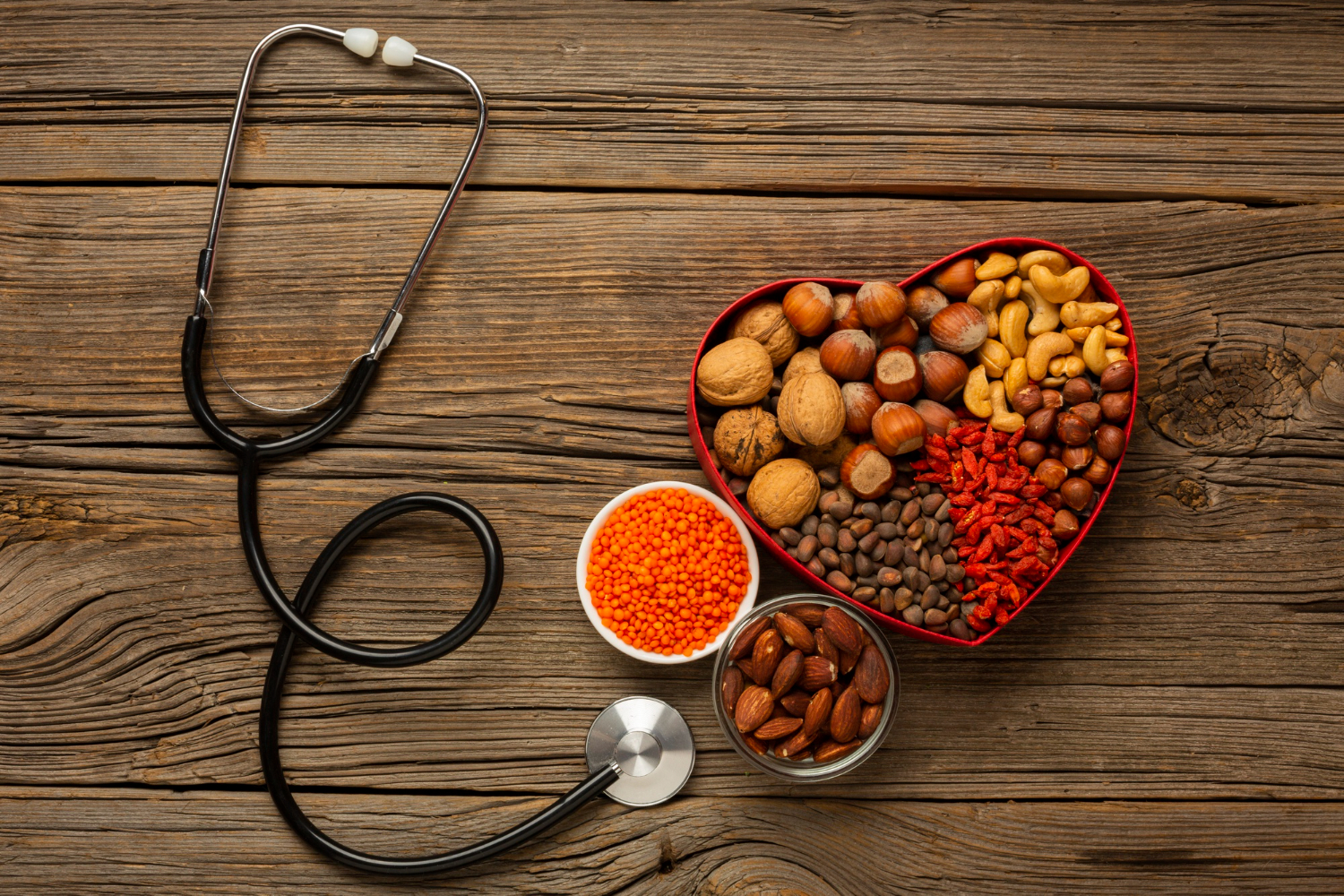
A diabetes-friendly diet is not about eliminating all carbohydrates or following a complicated 'diabetic food list'. The goal is to manage blood glucose while providing enough fibre, protein, vitamins and energy for daily life.
Build balanced meals
A practical plate can include plenty of non-starchy vegetables, a suitable protein source and a controlled portion of carbohydrate such as roti, rice, oats, millets or other whole grains. The right portion varies with medicines, activity, body size and glucose targets.
Indian foods can fit
Dal, chana, rajma, vegetables, curd, eggs, fish, lean meats, nuts and whole grains can all be part of a balanced pattern. The key is portion size and the overall meal rather than labelling a food as simply 'good' or 'bad'.
Watch drinks and refined foods
Sugary drinks, sweets, sweetened tea or coffee and frequent refined snacks can raise glucose quickly. Whole fruit is generally preferable to fruit juice because it contains fibre and is eaten more slowly.
Monitor individual response
People respond differently to foods. If you check glucose at home, your readings and meal pattern can help your clinician or dietitian identify useful changes. Medicines should not be reduced or stopped because a diet change seems to improve glucose.
When to seek medical help?
Very high or very low glucose with confusion, fainting, severe weakness, vomiting, deep or rapid breathing, or inability to take fluids requires urgent medical care.
Medical note: This article is for general health education and does not replace an examination, diagnosis or personalised medical advice. Treatment decisions should be made with a qualified healthcare professional.
You might also like
Jul 05, 2026
Role of ICU in Critical Care
Jul 01, 2026
How NICU Saves Lives

Jun 25, 2026