
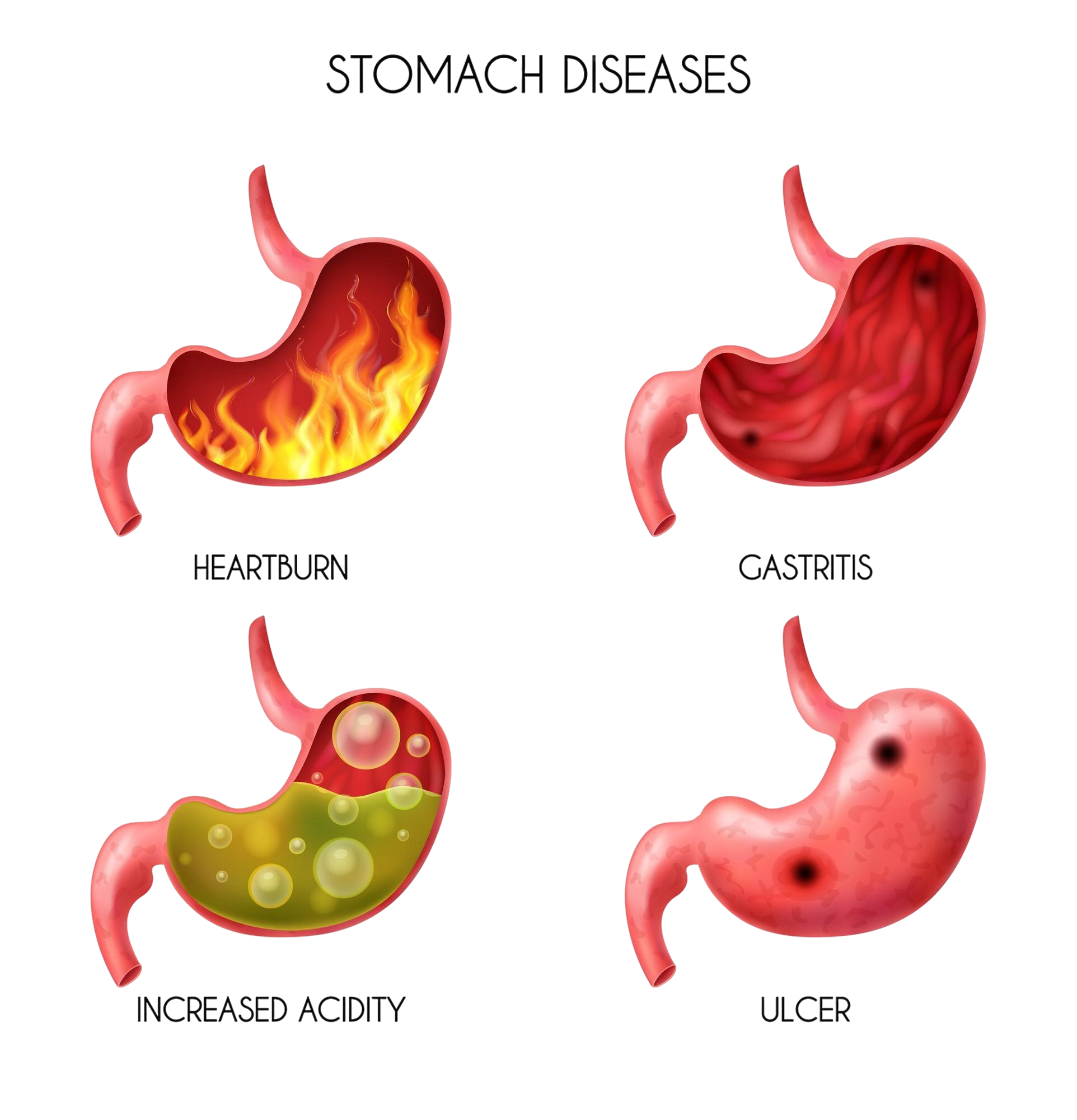
Gastritis and acidity are common terms used for upper abdominal discomfort, but they do not describe one single disease. Indigestion, reflux, gastritis, ulcer disease and medication-related irritation can feel similar, so persistent symptoms should not be self-labelled indefinitely.
Common symptoms
People may report burning or discomfort in the upper abdomen, bloating, belching, nausea or a sour taste. Reflux often causes burning behind the breastbone or regurgitation, especially after meals or when lying down.
Common triggers
Large meals, late-night eating, certain foods, alcohol, tobacco, stress and some medicines can worsen symptoms. Non-steroidal anti-inflammatory pain medicines can irritate the stomach in some people.
When testing is needed
Persistent symptoms, recurrent vomiting, unexplained weight loss, anaemia, difficulty swallowing or bleeding symptoms need medical evaluation. Depending on age and risk, a clinician may consider tests for H. pylori or endoscopy.
Practical measures
Smaller meals, avoiding lying down immediately after eating, reducing individual triggers and maintaining a healthy weight can help reflux symptoms. Treatment should match the suspected cause rather than relying indefinitely on over-the-counter medicines.
When to seek medical help
Vomiting blood, black stools, severe persistent abdominal pain, fainting, difficulty swallowing or unexplained weight loss requires prompt medical attention.
Medical note: This article is for general health education and does not replace an examination, diagnosis or personalised medical advice. Treatment decisions should be made with a qualified healthcare professional.
You might also like

Jul 05, 2026
Role of ICU in Critical Care

Jul 01, 2026
How NICU Saves Lives

Jun 25, 2026