
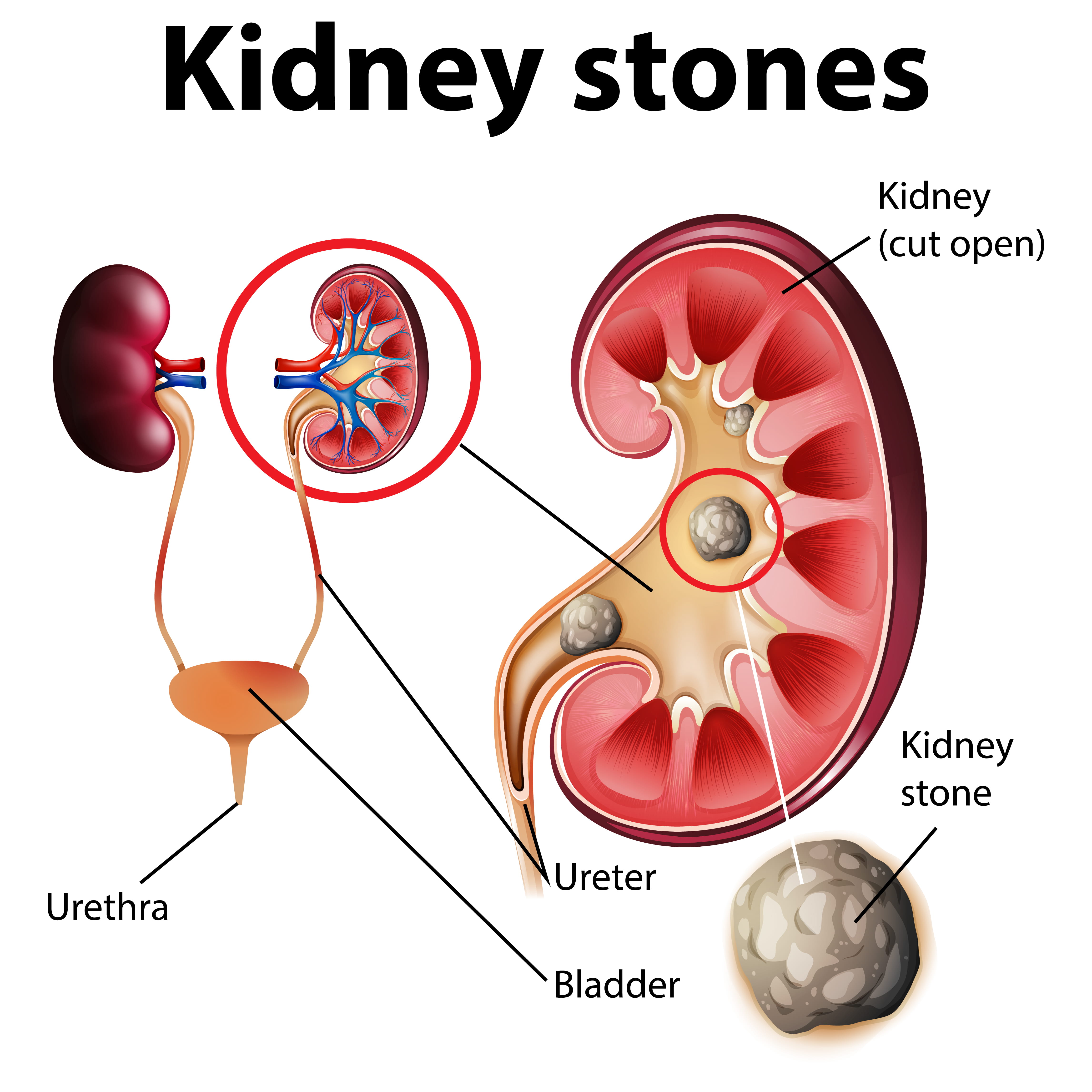
Kidney stones are hard deposits that form inside the urinary system. Hot weather and inadequate fluid intake can contribute to stone risk, making prevention particularly relevant in hot parts of India. Different stones have different causes, so recurrent stones deserve evaluation.
Typical symptoms
A stone can cause severe pain in the side or back that may move toward the groin. Nausea, vomiting, blood in the urine and urinary symptoms may occur. Pain often comes in waves as the ureter contracts around the stone.
Why fever matters
A blocked urinary system with infection can become dangerous. Fever or chills in someone with suspected obstruction should not be managed at home without assessment.
Diagnosis and treatment
Urine testing and imaging help determine whether a stone is present, its size and its location. Small stones may pass naturally, while larger or obstructing stones may require procedures such as ureteroscopy or shock-wave treatment depending on the situation.
Prevention
Drinking enough fluid to keep urine relatively dilute is one of the most important preventive measures. Dietary advice depends on stone type and may include changes in salt, animal protein, calcium or oxalate intake. Recurrent stone formers may benefit from metabolic evaluation.
When to seek medical help?
Fever with stone symptoms, inability to pass urine, uncontrolled pain or vomiting, a single functioning kidney, pregnancy or marked weakness warrants urgent medical evaluation.
Medical note: This article is for general health education and does not replace an examination, diagnosis or personalised medical advice. Treatment decisions should be made with a qualified healthcare professional.
You might also like

Jul 05, 2026
Role of ICU in Critical Care
Jul 01, 2026
How NICU Saves Lives

Jun 25, 2026